

Resilience is the ability to bounce back from adversity. It’s about navigating life and its challenges with resources in your toolkit, despite all those curveballs life throws at you. It’s your ability to keep living and creating, after your spouse died, despite the war in your country, in spite of a pandemic and/or despite a health issue. Everyone I’ve ever met who has exceptionally strong resilience skills, learnt them in the face of some hardship.
Resilience does not mean: not grieving, not feeling anger, not feeling frustration, not feeling despair, not feeling hopeless at points. It is about feeling all those natural emotions, processing and moving through them, and continuously finding ways to choose to create from the reality you now have. Resilience is tied to your ability to choose moving away from feeling stuck as the victim of something (even if it objectively might be true that you became the victim of something). Resilience is about creating and living rooted in your own optimism, strength, creativity and resourcefulness despite all the adversity in your life.
We will all face situations in our lives that are incredibly challenging, sometimes even downright traumatic. Resilience is our ability to navigate these situations, figure out what grounds and stabilizes us, intentionally shift to our inner power (or find a way to ask for help with this), and then move forward from there. As everyone who has gone through a crisis in their lives can tell you, you often emerge stronger than before. That is if you can find a way to constructively process your crisis. When what you’ve faced is so traumatic that you can’t do this on your own, you need professional help. In fact, you will always bounce back and land on your feet again faster if you can ask for help (or at least have compassionate company) in those situations.
My journey with resilience
I’ve been “lucky” in 2016: I faced a really horrible breakup, just after moving back to the United States (finding myself in a country that would throw things like “go back to where you came from you f**ing libtard!” my way as I took a stand for my values in those Trump years). I was so depressed and sad about this breakup, that I literally spent six months crying every single day. All my deepest insecurities got triggered (“I’m not worth being loved”, “I’m not good enough”). I felt like I had a dark heavy load on my shoulders while having lost the ability to be joyful and light. I have never cried that much in public (like on the subway or on my way walking through the Boston Common to work) as in those six months after Labor Day 2016. And to make the challenge complete: my employer went through a round of layoffs, reshuffled my team and promoted me into the leading product role, with a scared and much diminished team. This happened on the same weekend my fiancé left and ghosted me after five years. It felt like the perfect storm and what was worse: I felt like I had no ability to surface back into a way of being that feels healthy, joyful and like myself.
First I thought: ok, this is a lot, everyone is sad after a breakup, everyone cries after a breakup, you just got your heart broken, it’s normal to not feel good. And in hindsight, what a wise initial reaction: obviously it’s ok to feel sad and obviously it’s ok to grieve the relationship I had just lost without an explanation. And also: I was incredibly lucky: I was in the company of really amazing friends when that breakup email arrived in my inbox. I had just flown to Denver to go hiking in the mountains with a group of close friends. The amount of hugs, care and holding I received while dealing with that initial shock of the lost relationship was incredibly valuable. They let me be sad, they let me cry, they were just there for me.
It was much harder when I flew back home to Boston and stepped into my apartment alone. And without knowing it, in hindsight I realize: this was already one of those resilience lessons I’ve since learnt: a circle of close friends, also outside your primary relationship, are an extremely important resource when you need to process something that is challenging or hard. The mere act of sharing what is going on, and somebody sitting with you listening, is incredibly powerful. And: when you still find yourself crying every single day six months later, when you desperately want to feel better again and you don’t know how, you realize something needs to change.
So why did I say I was “lucky” about all of that happening to me in 2016? I will not say that I particularly enjoyed being in a mental health crisis. But it did come with some incredibly valuable gifts: it was so painful, that it forced me to look for ways to deal with that pain. And although it took me a long time to find things that worked, it set me on this course to find and try anything I had control over, that would allow me to feel better again. There could have been no better preparation for what was to come in 2020 with our global pandemic. I already knew what kind of things add joy to my life, I knew that I needed friends to reach out to and speak with, and I curiously signed up for the resilience course offered by University of Pennsylvania as a free online resource anyone can take. I knew that whatever else I could formally learn about resilience would come in super handy in times of high uncertainty where our entire world got turned upside down globally.
Resilience as a leadership skill
Which leads me to why resilience is an incredibly useful skill to have as a leader. You will be facing minor or major challenges with your teams on an almost daily basis. They will likely not feel as personal and as painful as a full on mental health crisis (although you might face that as well either yourself or with individuals in your team). If you can be prepared to first of all anticipate that challenge, stress, unpredictability, ambiguity and feeling overwhelmed is to be expected as part of any leadership role, you’re in a much better position to also have a plan for how to meet these situations as they arise. You ideally made that plan, and practiced those skills, ahead of the difficult moment. You’re much less likely to find the best state of being intuitively, when you’ve just been triggered into a stress reaction (when you are in fight, flight, freeze or fawn). You’re not typically accessing your best leadership qualities while you’re acting from habits rooted in fears for survival (which is what these stress reaction patterns help you access). Resilient leaders are capable to recognize their stress levels fast, shift their state of being to something more calm, joyful and expansive, and then take their next action from there. They are a calming and co-regulating influence on their team, rather than an extra stress factor for those around them.
Here are a few practices and resources that might help you get there:
- Train your ability to sense in your body what your emotional state of being is. Knowing this allows you choice to do something about it when necessary. Or celebrate, when you actually feel good.
- Breath exercises and grounding exercises can calm you down.
- Affirmations and the building of inner resources that let you access your creative, powerful, resourceful and expansive parts build the voice of your inner leader.
- Emotional processing, self-regulation and co-regulation skills allow you to shift from a stressed state or from being in fear to a more calm, grounded and centered state.
- Building intentional ways to access joy, ease and playfulness trains your muscle of how to shift to them. It also simply is a joyful, easy and playful experience to have these practices in your life.
- A regular gratitude practice helps you identify and appreciate everything in your life that are already going right. This can include very mundane and simple things, like enjoying the beauty of a flowerbed in the park you walk by every morning.
- Hiring a coach to help define inner resources, help process stuck emotions and help identifying and choosing new paths can lead to more useful habits and choices. A coach is by definition part of your support team and interested in your wellbeing and growth.
Benefits of learning about resilience
When you learn about the topic of resilience while feeling well, you can prepare ways and practice helpful resilience habits ahead of the next challenge you might face. Some of these things are actually really fun and relaxing. You can choose to:
- spend more time with people you are close with,
- find and do what brings you joy,
- sit in silence listening to your thoughts, emotions and the wisdom of your body,
- just breath reminding yourself that it is a complete miracle to be alive in this moment on planet earth,
- practice gratitude for what you have,
- say thank you to somebody in your life,
- create something beautiful,
- do something nurturing (for yourself or others),
- or simply enjoy the feeling of a hot cup of tea in your hands.
You can literally do anything that lifts your spirit, nurtures and expands the joy for yourself and those around you. The point is to do it intentionally.
Taking it back to your team
When you take your ability to bounce back from adversity – and into joy – back into your team, you’re much more likely to stay calm in the face of stress, be a positive influence for the emotional co-regulation in your team and have access to your most creative, resourceful and powerful problem solving skills. All traits, that come in super handy when you want to inspire, innovate, experiment and co-create new products, services or solutions with your team. Practicing resilience means intentionally focusing on grounding, appreciation, curiosity, joy, nurturing and expansion. As a bonus: you get to do more of all those things that are inherently nice and good for your own mental and physical health. You’ll be a support to your team, and you’ll allow your team to be a support for you as well. Who does not want to work in a nourishing, accepting, appreciative and joyful team? Your resilience skills and practices help build that. They might just be your secret superpower.
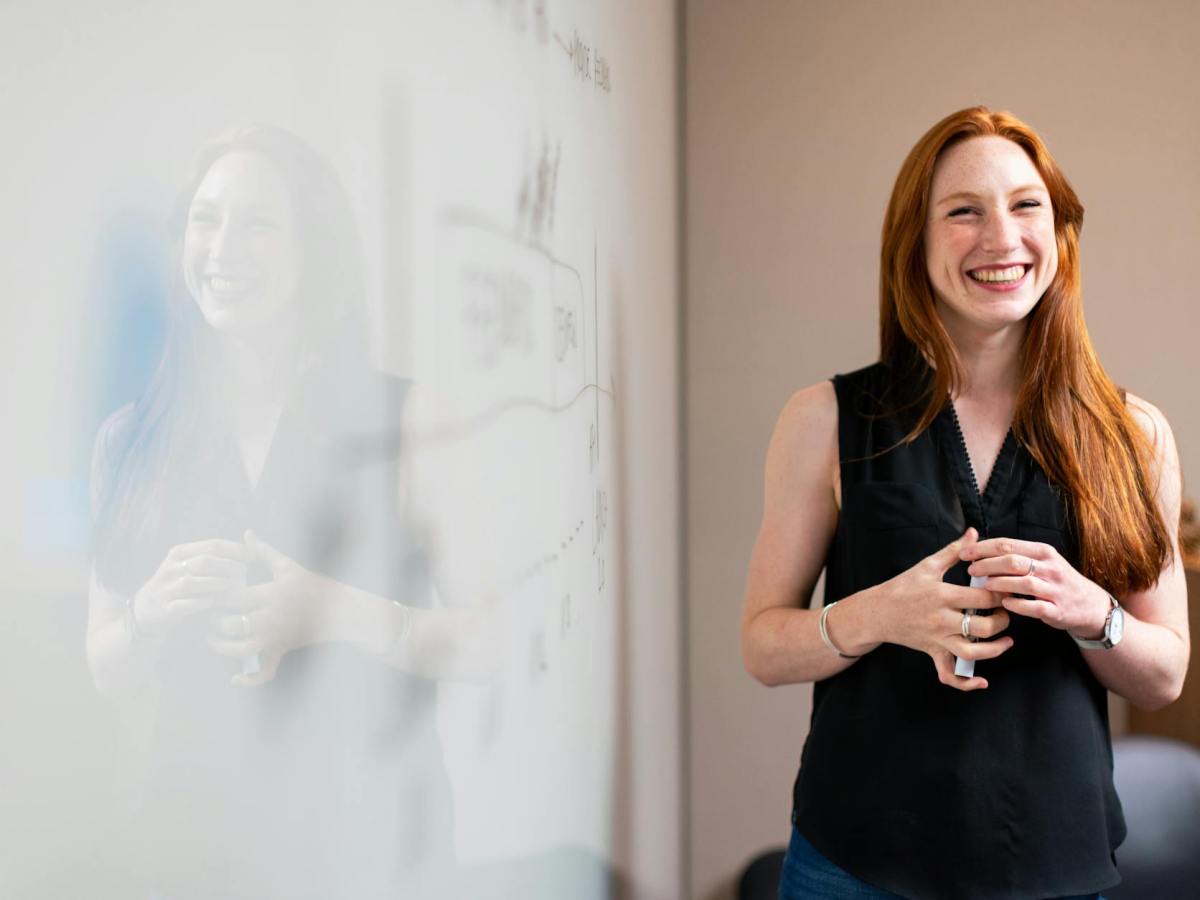
Photo by Alex Shute on Unsplash
___________________________
If you would like to explore this more: reach out for a free discovery session with me.
I coach, speak, do workshops and blog about #leadership, #product leadership, #innovation, the #importance of creating a culture of belonging and how to succeed with your #hybrid or #remote teams.
Get my latest blog posts delivered directly to your inbox.
Your email address will only be used for receiving emails with my latest blog posts in them. You can unsubscribe at any point in time.
If you enjoyed reading this post, you may enjoy the following posts as well:

Leading Product Teams Through the AI Fog: A practical approach
One of the things product leaders enjoy the most about their roles is to invest into the personal growth of their teams. A task that has become a new kind of challenge in a world where AI seems to have taken over what it means to work, create and lead in product. How might we…


The RoI of AI initiatives and the realistic cost of AI readiness
We live in this funny world, where for a few quarters we currently get to play with AI use cases without having to show the RoI of our efforts just yet. But AI will not change the rules of business at a fundamental level. Profitability, EBITDA, revenue growth and cost efficiency will continue to matter…
Your first 90 days in your new product leadership role
Congrats! You have just been promoted, or you were hired into a new product leadership role. That’s super exciting, and also the best time to make an intentional plan for how to succeed in it. The first three months count in setting you up for success (or learning fast, that this particular role is not…

The core Jobs To Be Done for a product leader
Whenever I coach a newly promoted product leader one of the first questions they ask is what the job of a product leader even is. They often feel very insecure about their new responsibilities and lost as to where to get started and whose input to trust. Product Leaders are often advised to develop a…

How Product Leadership must evolve in the age of AI
When the internet became mainstream it had a huge effect on how organizations and teams worked and collaborated. The whole digital software product space came into existence at the time. AI is an equally big new influence affecting teams today, and the role of Product Leadership has to evolve again. There are two main perspectives…

Finance skills for product people
Every executive team is focused on the financials. They care about revenue and their organization’s financial results. Understanding how to relate the value of what we do in product storytelling to business results and money is a key factor in getting teams funded and being trusted with our roadmap priorities. Ideally, product initiatives make sense…
 Inclusive Leaders